
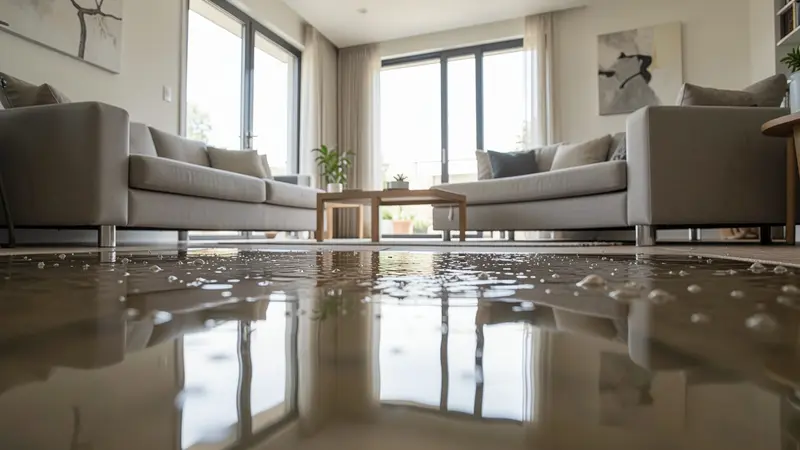
Most water damage compensation claims settle within 4 to 12 weeks, though complex cases involving disputed liability or major structural repairs can take six months or longer. The exact timeline depends on how quickly the source of the leak is identified, whether liability is accepted, and how efficiently your insurer processes the paperwork.
If you’re dealing with a leak from a flat above yours, the clock usually starts the moment the damage is reported and documented, not when the leak itself began. Getting a plumber out fast to confirm the cause matters just as much as the claim paperwork itself.
Working out who pays isn’t always straightforward, especially in blocks of flats where pipework runs through shared walls and ceilings. In many cases, a water leak from flat above compensation claim depends on proving negligence, such as a burst washing machine hose or a poorly maintained bathroom seal, rather than pure bad luck like a hidden pipe failure that falls under the building’s own policy.
Quick Answer
- Straightforward claims with accepted liability: 4 to 8 weeks
- Claims requiring a loss adjuster: 8 to 16 weeks
- Disputed liability or major repairs: 3 to 6 months or longer
- Small claims court route (if unresolved): add another 2 to 4 months
What Determines How Long a Claim Takes
A water damage compensation claim’s length depends mainly on three things: how quickly the leak source gets fixed, whether the party at fault admits liability, and how backed up the insurer’s claims team is. Claims move fastest when there’s clear evidence and no argument over who’s responsible.
1. Reporting and Documentation (Week 1)
The first week sets the tone for everything that follows. Photograph the damage as soon as you spot it. Note the date, time, and any conversation with the neighbour upstairs. Call a plumber to trace and stop the leak before it spreads further.
Insurers want a paper trail, not a verbal account given three months later. The sooner this evidence exists, the sooner an adjuster can make a decision without asking for more.
2. Investigation and Liability (Weeks 2 to 4)
Once the claim is logged, an insurer (or a loss adjuster if the claim is large) will want to establish the cause. This usually means:
- A plumber’s report confirming what failed and why
- Photos or video of the pipework, appliance, or seal involved
- A statement from the flat above about what happened
- Confirmation of who holds buildings insurance for the block
If the cause is obvious and admitted, this stage can wrap up in a week. If there’s any doubt about who’s at fault, expect it to stretch into a month.
How the Claims Process Works Step by Step
- Report the leak and stop it at the source
- Document damage with photos and written notes
- Notify your insurer and the insurer of the flat above, if known
- A loss adjuster or plumber assesses the cause and extent
- Liability is confirmed or disputed
- Repair quotes are gathered and approved
- Compensation is paid, or repairs are carried out directly
- Final sign-off once repairs are complete
Each step can move quickly on its own, but delays at any single stage push the whole timeline back.
Who Is Liable for Water Damage From an Upstairs Flat?
Liability generally comes down to negligence. If the leak resulted from something the upstairs resident could have prevented, such as an unmaintained appliance, an overflowing bath, or ignoring a known drip, they (or their insurer) are usually liable. If the failure was a hidden pipe or a building defect, the freeholder’s buildings insurance typically covers it instead.
| Cause of Leak | Usually Liable | Typical Claim Route |
| Burst washing machine hose | Upstairs resident | Their contents/liability insurance |
| Overflowing bath left unattended | Upstairs resident | Their contents/liability insurance |
| Failed communal pipe in ceiling void | Freeholder/management company | Buildings insurance |
| Old, corroded plumbing (structural) | Freeholder | Buildings insurance |
| Unknown cause, no negligence proven | Often split or unresolved | Buildings insurance as fallback |
An upstairs water leak compensation claim is a request for financial recovery of repair costs, damaged belongings, or temporary accommodation caused by water escaping from the flat above and entering the property below.
What Does the Building’s Insurance Actually Cover
Buildings insurance for the block usually covers damage to the structure itself, ceilings, walls, and fixed fittings. It does not normally cover the upstairs resident’s own contents or your personal belongings unless negligence is proven against them specifically.
This is where flat above leak insurance often causes confusion. Leaseholders assume the block’s policy pays for everything, when in reality it may only cover the shell of the building, leaving contents and betterment costs to be claimed separately through the party at fault.
What Slows Down a Water Damage Claim
A few things reliably add weeks to a claim:
- The upstairs neighbour disputes responsibility or won’t respond
- No plumber’s report exists to confirm the cause
- Multiple insurers are involved (yours, theirs, and the block’s)
- The property needs drying out before damage can be fully assessed
- Repair quotes come in with big cost differences, triggering further review
Damp and drying time alone can add two to three weeks before a final repair figure is even possible, since surveyors need the property to dry before assessing hidden damage.
How to Speed Up Your Claim
Acting fast and keeping records tight makes the biggest difference. Practical steps that help:
- Report the leak to your insurer within 24 to 48 hours
- Get an independent plumber’s report the same week
- Keep receipts for any emergency repairs or temporary accommodation
- Communicate in writing with the upstairs resident, not just verbally
- Ask your insurer for a named claims handler rather than a general queue
Claims where the homeowner provides strong, early evidence tend to settle in the shorter end of the 4 to 8 week range.
FAQ
1. How long does a water leak insurance claim take on average?
Most claims take between 4 and 12 weeks from report to payout, assuming liability isn’t disputed and the property doesn’t need extensive drying out.
2. Who pays for water damage from the flat above?
Usually the resident whose negligence caused the leak, through their contents or liability insurance. If the cause was a hidden structural pipe, the building’s insurance typically covers it instead.
3. Can I claim compensation if my neighbour’s leak damaged my belongings?
Yes, provided you can show the leak came from their flat and caused specific, documented damage. A plumber’s report and photos strengthen the claim significantly.
4. What happens if the upstairs neighbour refuses to admit fault?
The own insurer can still investigate and may pursue the other party’s insurer directly on your behalf, which can add several weeks to the process.
5. Does buildings insurance cover a leak from the flat above?
It covers damage to the structure and shared parts of the building in most cases, but rarely covers personal belongings in the flat below unless negligence is proven.
6. How much compensation can I claim for water damage?
Compensation typically covers repair costs, replacement of damaged items at their current value, and reasonable temporary accommodation if the property is unlivable during repairs.
7. Do I need a solicitor for a water leak compensation claim?
Most claims are resolved through insurers without legal involvement. A solicitor may become necessary only if liability is firmly disputed and the case moves toward small claims court.
8. How long do insurers have to respond to a water damage claim?
There’s no fixed legal deadline, but most UK insurers aim to acknowledge a claim within 5 working days and provide an initial decision within 4 to 6 weeks.
Getting the Leak Fixed First
Before any compensation claim can move forward, the actual leak needs stopping. Chasing paperwork while water keeps coming through the ceiling only makes the damage, and the eventual claim, bigger. A qualified plumber who can trace the source quickly, whether it’s a failed seal, a burst pipe, or an overflow, gives you the documented starting point every insurer will ask for.
0800 Homefix handles exactly this kind of job, sending a plumber out to identify and fix the source of the leak while providing the kind of clear, written assessment that speeds up a compensation claim rather than delaying it. Getting that first step right often shaves weeks off the whole process.