
The Color-Weight Confusion That Trips Up Most Shoppers
Poor sleep setup choices add up quietly, and a mismatched blanket is one of the most overlooked culprits behind restless nights. People lose hours of quality rest chasing warmth from heavy comforters when the real issue is material, not mass. Left unaddressed, this habit of over-layering can leave bedrooms feeling cluttered and still fail to solve the temperature problem it was meant to fix.
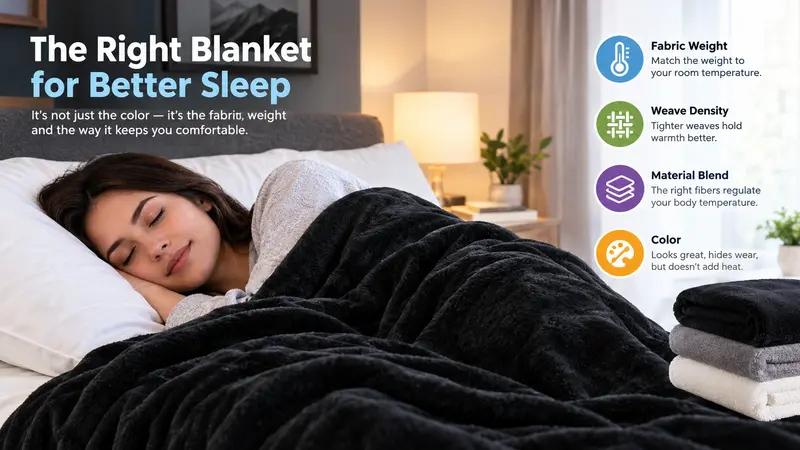
A common assumption is that darker colors trap more heat because of how they behave in sunlight, so shoppers think a black blanket will feel noticeably warmer than a lighter one indoors. That logic works outdoors under direct sun, but bedrooms do not get hit with the same kind of radiant exposure. Indoor warmth comes mostly from fiber density, weave tightness, and how well a fabric holds body heat close to the skin. Color plays a visual role far more than a thermal one once you step inside.
Another misconception involves thinking any thick-looking blanket will automatically regulate temperature well through the night. Thickness can be deceiving because loosely woven fibers trap less air and release heat faster than a tightly knit fabric half its size. People who wake up sweating or chilled midway through sleep often blame room temperature when the blanket’s construction is the actual variable at play. Shoppers also tend to assume that softness and warmth come from the same source, when they are usually separate qualities tied to different manufacturing choices.
Matching Fabric Weight to Your Actual Sleep Environment
What actually solves the problem starts with matching fabric weight to the room you sleep in rather than chasing color or price point alone. Rooms that run cold year-round benefit from denser weaves, while warmer climates do better with lighter, breathable fiber blends that still provide coverage without trapping excess heat. Testing a blanket across a few nights, rather than judging it by feel in a store, gives a more accurate read on how it performs once your body heat gets involved. A blanket can feel plush to the touch and still perform poorly at holding warmth if the fiber strands are spaced too far apart, which explains why some expensive-looking throws underdeliver once winter arrives.
Temperature regulation during sleep is tied closely to consistent, uninterrupted rest cycles, which is one reason stable thermal conditions get flagged as a factor worth addressing directly in clinical sleep research rather than through guesswork about bedding choices. A blanket that holds steady warmth without overheating supports the kind of consistency those recommendations describe. Getting this right often means looking past aesthetics and focusing on fiber composition first, since gsm weight and material blend tell you more about expected warmth than shade ever will.
Choosing Between Styles Once You Know What to Look For
Once the weave and fiber question is settled, color becomes a secondary decision based on how a bedroom is used and styled, and this is where browsing black blanket options can help narrow things down without sacrificing the thermal performance discussed earlier. A darker throw can hide everyday wear and pairs easily with most bedroom palettes, which makes it a practical pick for households with pets or frequent guests. None of that changes the underlying physics of warmth, but it does make the decision easier once comfort needs are already met.
Shoppers who keep a seasonal rotation, switching between lighter and denser options as temperatures shift, tend to report fewer midnight adjustments and steadier sleep overall, a pattern consistent with American Academy of Sleep Medicine guidelines on maintaining stable sleep environments. Small changes like this rarely get attention compared to mattress or pillow upgrades, yet they influence comfort just as directly. Paying attention to fiber content, weave density, and seasonal fit turns a routine bedding purchase into a more deliberate choice suited to how a person actually sleeps.