
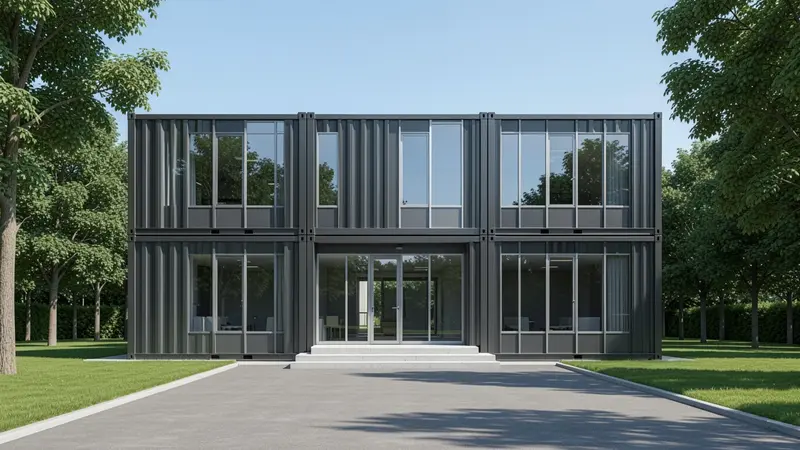
When a business needs more space, it’s only natural to assume it will come with months of noise, dust, and constant disruption. Thankfully, the traditional bricks-and-mortar route is no longer your only option.
Over the last few years, modular office buildings have become a highly popular alternative. They offer a smarter, more flexible way to create high-quality workspaces while drastically cutting down on site traffic, transport costs, and energy waste. Whether you’re expanding, relocating, or upgrading your facilities, it’s important to understand how modular compares to traditional construction.
In this guide, we’ll explore the key differences to help you decide which approach is right for your business.
What Are Modular Office Buildings?
A modular office is made using prefabricated sections, known as modules. These are built off-site in a controlled factory environment, transported to your premises, and assembled by a team of experts.
This splits the project into two simultaneous stages:
- On-site: Groundwork and foundations are prepared.
- Off-site: The building itself is manufactured at the same time.
This parallel processing dramatically reduces overall timelines. Most importantly, modern modular buildings are far from temporary or lower-quality alternatives. They are designed to meet the exact same building regulations as traditional structures and serve as permanent, fully functional workspaces across a wide range of industries.
Key Benefits of the Modular Approach
1. Faster Build Times and Delivery
One of the most noticeable differences between modular and traditional construction is speed. Traditional builds are frequently delayed by bad weather, labour shortages, and supply chain issues, causing projects to drag on for months or even years.
Because modular offices are built indoors, work happens fast and stays on schedule. For businesses and non-profits, this speed is crucial. Faster completion means less downtime, fewer transport deliveries over an extended period, and a much quicker return on investment.
2. Drastically Less Site Disruption and Traffic
Traditional construction sites require a constant stream of heavy machinery, material deliveries, and subcontractor vehicles over many months. This creates massive localised carbon footprints and disruptions for both your team and your neighbours.
By comparison, a modular office keeps the vast majority of activity inside a single factory. When it’s time for installation, the components are delivered in a few coordinated trips and assembled quickly. This results in a cleaner, quieter process with fewer vehicles on location, allowing your teams to continue working smoothly.
3. Predictable Costs and Higher Efficiency
Budget control is another area where modular buildings stand out. Traditional projects are notoriously vulnerable to unexpected costs from weather delays and material price fluctuations.
Modular construction benefits from streamlined factory processes, leading to predictable pricing with no surprises along the way. You save money overall thanks to reduced labour hours, shorter timelines, and fewer logistical delays.
4. Reliable Quality and Consistency
There’s an old misconception that modular means lower quality. In reality, because these buildings are manufactured to precise standards in a weather-protected environment, the risk of errors is incredibly low. Traditional builds are exposed to rain, wind, and freezing temperatures, which can damage raw materials and impact workmanship.
5. Flexibility and Scalability
Businesses need change fast. Modular offices offer a level of agility that traditional buildings simply cannot match. If your company grows or moves, modules can be expanded, reconfigured, relocated, or even downsized with minimal waste and transport friction.
6. Sustainability and Lower Carbon Footprints
Sustainability is a priority for modern businesses, and this is where the modular method truly shines:
- Reduced Waste: Factory manufacturing allows for precise material cutting, drastically reducing scrap waste.
- Green Logistics: Consolidating shipments to the final site slashes transportation fuel consumption and emissions.
- Energy Efficiency: Modular designs often incorporate high-quality insulation and advanced energy-saving systems, lowering your operational footprint and energy bills for years to come.
Which Option is Right for Your Business?
Choosing between modular and traditional construction ultimately depends on your priorities.
| Choose Traditional Construction If… | Choose Modular Construction If… |
| You require absolute design freedom with no structural boundaries. | You need the project completed quickly to avoid business downtime. |
| You have no strict time constraints. | You want strict cost control and predictable budgeting. |
| Your location can easily handle months of heavy site traffic and noise. | You want to minimise your environmental impact and site disruption. |
A Smarter Way to Build Workspaces
The way we think about commercial workspaces is evolving. Businesses need environments that can keep pace with rapid change, support high productivity, and minimise environmental impact. That’s exactly what modular construction delivers.
By combining delivery speed, factory quality, and logistical efficiency, modular buildings offer a forward-thinking solution designed for the way modern businesses operate.
Ready to plan your next workspace? Get in touch with our friendly team today to start your project!